Pakistan stands at a historic moment. Our country possesses a unique geographical position, a young population, vast natural resources and a coastline that can connect South Asia, Central Asia, China and the Middle East. Among the opportunities available to Pakistan, few are as strategically important as the China-Pakistan Economic Corridor (CPEC) and the development of Gwadar Port. CPEC is not merely a road project, and Gwadar is not merely a port. Together, they represent a long term vision for Pakistan's connectivity, trade, industry, employment and economic strength.
The friendship between Pakistan and China has stood the test of time. For decades, China has supported Pakistan in infrastructure, energy, defence, education and development. CPEC represents the economic expression of this enduring friendship. Under CPEC, Pakistan has received major investments in energy, transportation and infrastructure. According to Pakistan's Planning Ministry, the first phase involved around $25 billion in projects, while dozens of projects have been completed. The government says CPEC power projects added approximately 8,800 megawatts to Pakistan's electricity generation capacity. These are not abstract promises; they represent roads, electricity, hospitals, training institutes, airports and other infrastructure that Pakistan can use for decades.
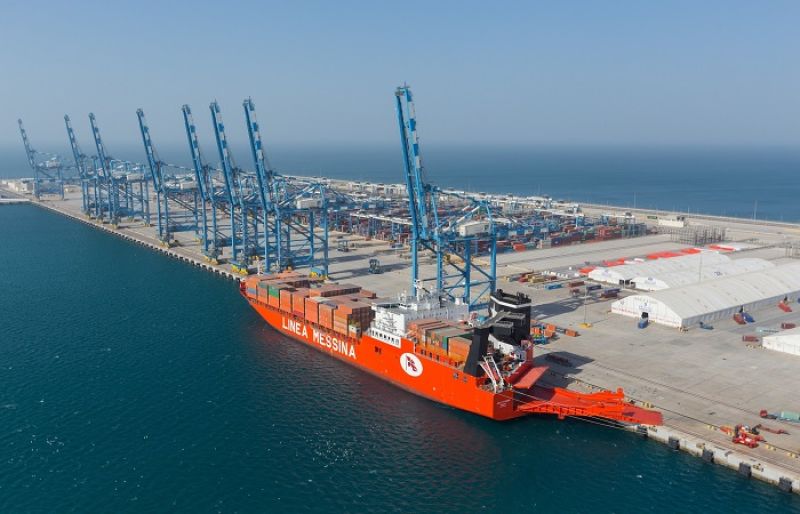
Gwadar occupies a remarkable position on the Arabian Sea. Its location gives Pakistan the potential to connect its domestic economy with international maritime trade while providing a gateway toward Central Asia, the Gulf and other international markets. Pakistan's planners have repeatedly emphasized Gwadar's potential as a regional trade and logistics hub. If developed properly, Gwadar can become one of the most important economic centres in the region.
The importance of Gwadar goes far beyond the port itself. A successful port requires roads, railways, warehouses, industrial zones, power, water, telecommunications, banking, hotels, logistics companies and skilled workers. Around these facilities can grow factories, export businesses, fisheries, tourism and technology companies. This is how a port becomes an economic ecosystem. This is also how Gwadar can change the economic future of Balochistan.
For the people of Balochistan, this opportunity is particularly important. Balochistan is Pakistan's largest province by area and possesses enormous natural and geographical potential, yet many of its districts continue to suffer from poverty, inadequate infrastructure and limited economic opportunities. The province cannot afford continued isolation. Its young population needs education, employment, entrepreneurship and access to national and international markets.CPEC can help change that situation.
The people of Balochistan should not see themselves as spectators of CPEC. They should become its principal participants and beneficiaries. The future of Gwadar should have a Baloch face. Baloch youth should become engineers, technicians, software developers, port operators, entrepreneurs, doctors, teachers, logistics specialists, fishermen, exporters and managers. They should acquire the skills required by the new economy and occupy the opportunities created by development.
This is why education is perhaps the most important investment Balochistan can make in the CPEC era. The Pak China Technical and Vocational Institute in Gwadar is an important example. Young people should be encouraged to learn electrical and mechanical technology, welding, construction, maritime services, logistics, information technology, tourism, fisheries and other technical skills. Knowledge of English and Chinese can also open new doors in trade and international business.
The Gwadar Free Zone provides another major opportunity. According to official CPEC information, approximately 2,281 acres have been allocated for the Free Zone. The purpose is to establish an industrial and commercial ecosystem around the port. Baloch entrepreneurs should not simply wait for outside companies to create jobs. They should establish their own transport companies, warehouses, restaurants, hotels, fisheries businesses, food processing units, construction companies, technology firms and export enterprises.
The objective should be clear: Balochistan should not merely provide land for economic development; Balochistan should own, manage and benefit from a significant part of that economic activity.
Development must also address the everyday needs of ordinary citizens. A modern port cannot be separated from the welfare of the people living around it. Water, electricity, schools and hospitals are essential. CPEC has already included projects addressing these needs. The official CPEC programme includes the Pak-China Friendship Hospital, desalination facilities and water supply infrastructure. The CPEC Secretariat reports that a 158 kilometre pipeline system has been constructed to connect water sources with Gwadar, while additional desalination capacity is being developed.
These investments should be expanded. The people of Gwadar deserve reliable drinking water, quality healthcare, modern education and dependable electricity. If Pakistan wants CPEC to become a genuine national success story, the first beneficiaries must include the people living in the region where this historic project is being developed.
At the same time, Pakistan must recognize that economic development cannot survive without peace and security. No investor wants to establish a factory where workers are unsafe. No international company wants to send its employees into an environment of terrorism. No tourist wants to visit a region where violence is common. No businessman can plan for the future when infrastructure is repeatedly attacked.
This is why terrorism and sabotage against CPEC are not merely attacks on buildings, roads or foreign workers. They are attacks on Pakistan's economic future and, most importantly, attacks on the future of Balochistan's own young people.
When a road is destroyed, Balochistan loses. When a school or hospital is attacked, Balochistan loses. When an engineer or worker is killed, Balochistan loses. When an investor becomes frightened and takes his investment elsewhere, Balochistan loses. When insecurity prevents a factory from opening, it is a young Baloch man or woman who may lose the opportunity for employment.
Pakistan therefore has every reason to remain vigilant against terrorism, sabotage and attempts by hostile forces to exploit instability. Pakistan has repeatedly accused hostile external actors of supporting militant activities in Balochistan, while those accused have denied such allegations. Whatever the individual case, there is no doubt that militant attacks against Pakistani and Chinese citizens have the potential to damage investment, undermine confidence and slow economic development.
Those who wish to see Pakistan economically weak understand the strategic importance of connectivity. A successful CPEC can increase Pakistan's importance as a regional trade and logistics centre. A successful Gwadar can strengthen Pakistan's connection with international markets. A prosperous Balochistan can contribute enormously to the national economy. It is therefore the responsibility of every Pakistani to understand that economic stability is also a component of national security.
But Pakistan's answer to instability should not be merely security operations. The strongest long term defence against instability is prosperity.
A young man who has a good education, a meaningful career and hope for his family's future is less vulnerable to those who want to exploit frustration. A community that has functioning schools, hospitals, water supplies and businesses has more to lose from violence. A province whose people are economically connected to the rest of Pakistan has a stronger stake in national unity.
This is why the success of CPEC must be measured not only by kilometres of highways or billions of dollars invested. Its ultimate measure should be the number of Pakistanis whose lives improve because of it.
The people of Balochistan should demand their rightful share of that prosperity. They should demand jobs, education, healthcare, water, electricity, transparent governance and opportunities for local businesses. But these demands should be pursued through peaceful democratic institutions, political participation and constructive engagement.
The youth of Balochistan have a historic responsibility. They should reject the idea that their future must be defined by poverty, isolation or violence. They should choose education over ignorance, skills over dependency, entrepreneurship over hopelessness and peace over destruction. They should become the generation that transforms Balochistan into one of Pakistan's greatest economic assets.
Balochistan also has extraordinary potential in minerals, livestock, agriculture, renewable energy and tourism. CPEC can provide the connectivity required to turn these resources into economic value inside Pakistan. Instead of exporting raw materials without sufficient local processing, Pakistan should develop industries that process resources, create skilled employment and generate higher-value exports.
The second phase of CPEC should therefore be about more than infrastructure. It should be about industrialization, agriculture, information technology, tourism, exports, human development and private-sector growth. The infrastructure built during the first phase should become the foundation for a much larger economic transformation.
China can play an important role in this transformation through investment, technology transfer, industrial cooperation, vocational training and access to international markets. Pakistan should welcome Chinese cooperation while simultaneously ensuring that Pakistani workers, entrepreneurs and companies increasingly participate in the value created by these investments.
The Pakistan China relationship should therefore be understood as a partnership for the future. China has its economic interests, and Pakistan has its national interests, but these interests can be mutually beneficial when cooperation creates jobs, investment, technology and trade.
The ultimate vision should be a Gwadar where modern infrastructure exists alongside a prosperous local population; where a modern port operates alongside a modern fishing industry; where Chinese and Pakistani companies cooperate with Baloch entrepreneurs; where universities and technical institutes produce skilled young people; where factories produce goods for export; where tourists visit the coast; and where children grow up believing that their future can be built in their own province.
That is the Gwadar Pakistan should strive to create.
That is the Balochistan Pakistan should build.
The enemies of Pakistan, whoever they may be, cannot be defeated merely through speeches. Their attempts to undermine Pakistan's development can be defeated most effectively by making Pakistan stronger, more prosperous, more educated and more united.
A prosperous Balochistan will be Pakistan's strongest answer to those who want division.
A successful Gwadar will be Pakistan's answer to those who want isolation.
A successful CPEC will demonstrate what Pakistan and China can accomplish through long term cooperation.
The message to the youth of Balochistan should therefore be one of confidence: your province is not destined to remain on the margins of Pakistan's economy. You can become the engineers, entrepreneurs, technicians, professionals and leaders who transform it.
Do not allow anyone to convince you that your future lies in destruction. Your future lies in knowledge, skills, peace, business, technology and development.
Demand your rights. Build your skills. Start businesses. Protect schools, hospitals, roads and economic infrastructure. Participate in democratic politics. Work for the prosperity of your communities and for the unity and strength of Pakistan.
CPEC is an opportunity.
Gwadar is an opportunity.
The Pakistan China friendship is an opportunity.
And Balochistan must seize that opportunity.
The future of Pakistan will be stronger when Balochistan is prosperous. The future of Balochistan will be brighter when its people become active participants in the national economy. And the success of CPEC can become one of the defining achievements of Pakistan's economic history.