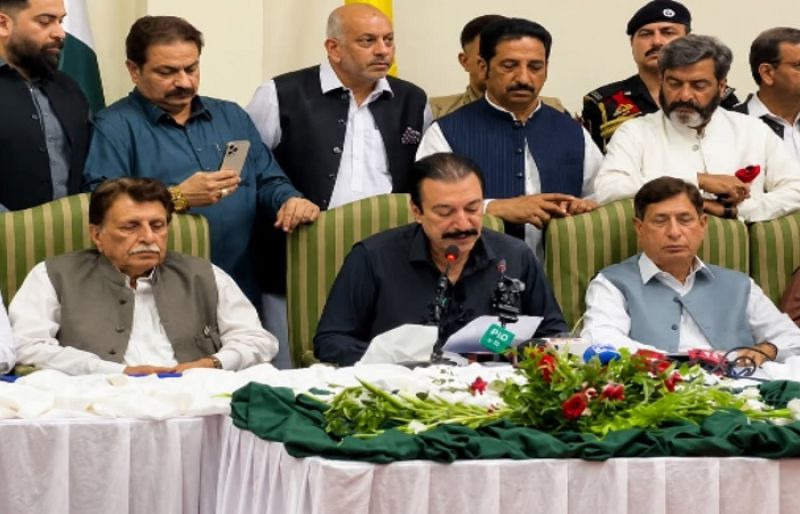
JAAC’s refusal to postpone its protest despite engagement by one of the highest-level political delegations assembled on the issue raises serious questions about its commitment to dialogue. The delegation included Ahsan Iqbal, Tariq Fazal Chaudhry, Rana Sanaullah, Qamar Zaman Kaira, Raja Pervez Ashraf, Shah Ghulam Qadir, Tariq Farooq, the Prime Minister of AJK, and Chaudhry Yasin, representing a broad political consensus and a genuine effort to resolve outstanding concerns.
With 35 out of 38 demands already accepted, portraying the negotiations as a failure is misleading. The overwhelming majority of public welfare concerns raised by JAAC have already been addressed, making continued escalation difficult to justify.
The three remaining issues are fundamentally different in nature. They involve fiscal policy, constitutional arrangements, and political consensus, making them unsuitable for resolution through street pressure, ultimatums, or deadlines.
* AJK generates approximately PKR 60 billion in annual revenue while operating a budget exceeding PKR 300 billion. The Government of Pakistan contributes roughly PKR 240–250 billion annually to bridge this gap, underscoring the need for fiscal realism when discussing taxation and revenue measures.
The demand for abolishing Advance Tax must be viewed in the context of these financial realities. Revenue decisions directly affect the government's ability to fund public services, development projects, and welfare programmes.
Pakistan’s support to AJK extends far beyond budgetary assistance. More than 63,000 refugees displaced since 1989 receive direct stipends funded by the Government of Pakistan, amounting to approximately PKR 15 billion annually.
The issue of elite privileges was open for discussion. The federal delegation expressed willingness to examine reforms and rationalisation measures, but meaningful progress requires practical proposals and structured engagement rather than broad slogans.
The issue of the 12 refugee seats is a constitutional matter that cannot be settled through pressure politics. These seats represent refugees from Indian-occupied Jammu and Kashmir and any change requires broad-based political consensus and constitutional procedure.
Comparisons with Indian-occupied Jammu and Kashmir are factually flawed. Refugee representation exists in AJK because there is a recognised refugee population whose political rights and representation remain a constitutional responsibility.
AJK’s own expenditure on refugees residing in Pakistan remains limited compared to the extensive financial, developmental, and welfare support provided annually by the Government of Pakistan.
The central question is no longer whether grievances were heard; most of them were. The question is whether the objective is resolution of issues or continuation of agitation despite substantial concessions.
The people of AJK should support dialogue over confrontation. When negotiations are active and solutions remain possible, escalation serves politics more than public welfare.
Citizens should demand transparency from all stakeholders and judge positions on facts rather than slogans. Every demand must be weighed against its financial, constitutional, and governance implications.
Constitutional issues should be resolved through democratic institutions, legislative processes, and political consensus, not through attempts to force outcomes from the street.
The public should reject any course of action that risks unnecessary instability, disrupts daily life, harms economic activity, or creates law-and-order challenges for ordinary citizens.
The true measure of any movement is not how many marches it organises, but how effectively it improves the lives of the people it claims to represent.
AJK’s future lies in responsible politics, constitutional processes, constructive dialogue, and solutions-oriented leadership—not in perpetual agitation after most demands have already been met.